

Chiropractic or Physical Therapy? How to Choose the Right Care in Grand Rapids MI
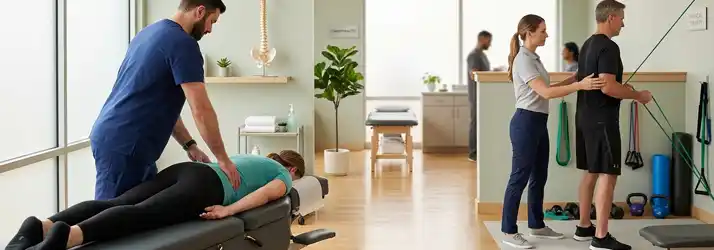
When pain starts affecting your work, sleep, exercise, or everyday activities, choosing the right type of care can feel confusing. You may be dealing with back pain, neck stiffness, an old injury, or difficulty moving normally and wondering whether chiropractic care or physical therapy in Grand Rapids MI would be a better fit.
Both approaches can play a role in managing certain musculoskeletal problems, but they are not the same. Chiropractors often use hands-on care to address the spine and joints, while physical therapists generally focus on exercises, movement, strength, and functional rehabilitation.
So, which one should you choose?
There is no single answer for everyone. The right approach depends on what is causing your symptoms, your health history, your physical limitations, and what you want to accomplish through treatment. Understanding the differences can help you have a more productive conversation with a qualified healthcare professional.
What Is Chiropractic Care in Grand Rapids MI?
Chiropractic care focuses on the musculoskeletal system, including the spine, joints, and surrounding muscles. A chiropractor evaluates your symptoms and physical condition before recommending an individualized care plan.
Treatment may involve hands-on techniques designed to improve movement and joint function. Depending on the patient's needs, a chiropractor may also recommend exercises, stretching, posture changes, or other supportive strategies.
Common chiropractic approaches can include:
- Spinal adjustments
- Joint mobilization
- Soft tissue techniques
- Stretching
- Corrective exercises
- Postural education
- Movement recommendations
- Home exercises
People commonly seek chiropractic care for concerns such as back pain, neck pain, headaches, joint stiffness, injuries, and other musculoskeletal problems.
At Innovative Health & Chiropractic in Grand Rapids, MI, Dr. Cory Wellman, D.C., provides individualized chiropractic care based on each patient's needs. The practice also offers services such as SoftWave Therapy, spinal decompression, myofascial release, and wellness care.
The important point is that chiropractic care is not a one-size-fits-all treatment. A proper evaluation should come before deciding which techniques are appropriate for you.
What Is Physical Therapy?
Physical therapy is a healthcare profession focused on helping people improve movement, strength, balance, flexibility, and physical function.
Physical therapists commonly use structured rehabilitation programs to help patients recover after injuries, surgery, or periods of reduced activity. Treatment may become more challenging as the patient gets stronger and more capable.
A physical rehabilitation program may include:
- Strength exercises
- Flexibility training
- Balance exercises
- Mobility work
- Core strengthening
- Functional movement training
- Gait training
- Injury prevention education
One of the biggest differences is the amount of active participation involved. Physical therapy generally relies heavily on exercises and movement practice that patients perform during appointments and at home.
If your primary goal is rebuilding strength or returning to a specific physical activity after an injury, a physical therapist may be an appropriate professional to consult.
Chiropractic vs Physical Therapy: Key Differences
The difference between a chiropractor and a physical therapist is easier to understand when you look at their typical treatment goals.
Chiropractic Care
- Primary focus - spine, joints, and musculoskeletal function
- Common techniques - adjustments, mobilization, soft tissue work
- Patient participation - may include exercises and home care
- Treatment style - often includes hands-on care
- Common goals - improve movement and manage musculoskeletal symptoms
- Treatment plan - based on evaluation and individual needs
Physical Therapy
- Primary focus - strength, movement, mobility, and function
- Common techniques - therapeutic exercise, movement training, rehabilitation
- Patient participation - usually a major part of treatment
- Treatment style - generally emphasizes active rehabilitation
- Common goals - restore strength, mobility, and function
- Treatment plan - progresses according to function and recovery
There is some overlap between the two. Both professionals may use exercises, stretching, movement education, and certain forms of manual therapy.
The decision should therefore be based on your condition rather than assuming that one profession is always better.
When Should You See a Chiropractor?
A chiropractor may be a good professional to consult when your symptoms involve the spine, joints, restricted movement, or other musculoskeletal concerns.
Depending on your evaluation, chiropractic care may be considered for:
- Lower back pain
- Neck pain or stiffness
- Joint discomfort
- Limited spinal movement
- Certain headaches
- Sports-related musculoskeletal problems
- Muscle or movement-related discomfort
- Recovery after certain injuries
At Innovative Health & Chiropractic, the team explains that chiropractic care may be used for a range of concerns beyond back pain, including headaches and migraines, neck discomfort, muscle strain, and pain related to injuries.
However, not every symptom should automatically be treated with chiropractic care. If your symptoms suggest a condition outside the scope of chiropractic treatment, an appropriate referral or medical evaluation may be necessary.
When Should You See a Physical Therapist?
Physical therapy may be especially useful when your recovery depends on rebuilding strength, improving functional movement, or gradually returning to normal activities.
A physical therapist may be appropriate for people recovering from:
- Surgery
- Sports injuries
- Muscle weakness
- Reduced flexibility
- Balance problems
- Mobility limitations
- Recurrent injuries
- Reduced physical conditioning
For example, someone recovering from a knee injury may need progressive strengthening and movement training to safely return to normal activities.
The same principle applies to many other injuries: reducing pain is important, but restoring the ability to move and function is often an important part of recovery.
Chiropractic Care for Back Pain
Back pain can have many causes, which is why treatment should be based on an appropriate evaluation.
For some people, hands-on chiropractic care may be considered when back symptoms are associated with restricted movement, joint stiffness, or other musculoskeletal problems.
Physical therapy may be particularly useful when weakness, reduced flexibility, or movement limitations are contributing to difficulty with daily activities.
In some situations, patients may use both hands-on treatment and exercise-based rehabilitation as part of a broader recovery plan.
At Innovative Health & Chiropractic, back pain is one of the conditions specifically highlighted by the practice, along with neck pain, headaches, whiplash, and several other musculoskeletal concerns.
If your back pain is severe, persistent, follows a significant injury, or is accompanied by concerning neurological symptoms, seek appropriate medical evaluation rather than relying only on conservative treatment.
Chiropractic Care and Physical Therapy for Sciatica
Sciatica describes symptoms that may travel along the path of the sciatic nerve. These symptoms can include pain, tingling, numbness, or weakness in the lower back, buttock, or leg.
Treatment depends on the underlying cause.
A chiropractor may focus on evaluating spinal and joint movement and determining whether chiropractic treatment is appropriate. A physical therapist may emphasize strengthening, flexibility, mobility, and movement retraining.
Depending on the individual, rehabilitation may involve:
- Core strengthening
- Hip mobility exercises
- Flexibility work
- Functional movement training
- Nerve-related exercises when appropriate
- Gradual return to normal activities
Because sciatica can have different causes, there is no single treatment plan that works for everyone.
Seek prompt medical attention if you experience significant or worsening weakness, numbness around the groin or saddle region, or new problems controlling your bladder or bowel movements.
What Does Research Say?
Patients understandably want to know whether the treatment they are considering is supported by evidence.
Research on musculoskeletal care supports several conservative treatment approaches, including exercise and certain forms of manual therapy, depending on the condition.
However, evidence does not mean that one type of provider is automatically better for every patient.
The appropriate approach can depend on:
- The cause of your symptoms
- Your diagnosis
- How long the problem has been present
- Your physical abilities
- Previous injuries or treatment
- Your recovery goals
The goal should be to identify an appropriate treatment plan for the individual rather than choosing a provider based solely on a general comparison.
The Role of Manual Therapy
Manual therapy refers to hands-on techniques used by appropriately trained healthcare professionals to address certain musculoskeletal and movement problems.
Depending on the provider and your condition, it may include:
- Joint mobilization
- Spinal manipulation
- Soft tissue techniques
- Assisted stretching
- Myofascial techniques
Manual therapy can be used alongside exercises and other forms of active care.
Innovative Health & Chiropractic also lists myofascial release as one of its services, along with chiropractic care, SoftWave Therapy, spinal decompression, and wellness care.
The purpose of hands-on care should be clear: it should fit into an individualized treatment plan rather than being presented as the solution for every condition.
Why Mobility Matters During Recovery
Feeling less pain is important, but recovery often involves more than pain reduction.
Improving mobility, strength, flexibility, balance, and movement can help people return to activities that matter to them.
A recovery plan may focus on:
- Improving joint movement
- Building supporting muscle strength
- Increasing flexibility
- Improving balance
- Correcting movement habits
- Gradually returning to physical activity
For this reason, exercise and movement education can be valuable parts of many musculoskeletal treatment plans.
Chiropractic vs Physical Therapy: Condition-by-Condition Guide
There is no universal treatment plan, but this general guide can help you understand where each approach may fit.
Lower Back Pain
Possible starting point - chiropractor or physical therapist
What may be considered - hands-on care, exercise, mobility work
Neck Pain
Possible starting point - chiropractor or physical therapist
What may be considered - evaluation, movement work, strengthening
Joint Stiffness
Possible starting point - chiropractor or physical therapist
What may be considered - mobility-focused care
Muscle Weakness
Possible starting point - physical therapist
What may be considered - progressive strengthening
Sports Injury
Possible starting point - physical therapist or chiropractor
What may be considered - depends on injury and recovery stage
Post-Surgical Recovery
Possible starting point - physical therapist
What may be considered - structured rehabilitation
Sciatica
Possible starting point - professional evaluation
What may be considered - treatment based on underlying cause
Balance Problems
Possible starting point - physical therapist
What may be considered - balance and functional training
Persistent Symptoms
Possible starting point - medical evaluation
What may be considered - further assessment may be needed
This table is a general guide and should not be used as a diagnosis.
How to Choose the Right Provider
Whether you are considering chiropractic care or physical therapy, look for a provider who takes time to understand your individual situation.
Start With a Thorough Evaluation
Your provider should review your symptoms, health history, physical limitations, and goals before recommending treatment.
Look for Individualized Care
A treatment plan should be built around your needs rather than applying the exact same approach to every patient.
Ask Questions
You should understand what treatment is being recommended, why it is being recommended, and what your role will be in the recovery process.
Consider the Full Treatment Approach
Hands-on care may be one part of treatment. Depending on your condition, exercise, movement education, lifestyle recommendations, or other services may also be appropriate.
At Innovative Health & Chiropractic, the practice states that its team works with patients to develop programs tailored to their individual needs.
Frequently Asked Questions
Manual therapy in physical therapy refers to hands-on techniques such as joint mobilization, soft tissue treatment, stretching, and other movement-based techniques. It may be combined with therapeutic exercises.
Have questions about your pain or treatment options? Contact Innovative Health & Chiropractic in Grand Rapids, MI, today.
Final Thoughts
Choosing between chiropractic care and physical therapy is not always an either-or decision.
The most appropriate option depends on your symptoms, diagnosis, physical condition, and recovery goals. Some people may benefit from chiropractic care, others may benefit from physical therapy, and some may need a broader treatment plan involving different types of care.
If pain, stiffness, weakness, or limited movement is affecting your everyday life, start with an appropriate evaluation. At Innovative Health & Chiropractic in Grand Rapids, MI, Dr. Cory Wellman, D.C., and the team provide individualized chiropractic and wellness care for patients with a variety of musculoskeletal concerns.
Contact the office to discuss your symptoms and learn whether chiropractic care may be appropriate for you.

OFFICE HOURS
Monday
8:00am - 6:00pm
Tuesday
11:00am - 7:00pm
Wednesday
8:00am - 4:00pm
Thursday
11:00am - 7:00pm
Friday
9:00am - 12:00pm
Saturday & Sunday
Closed

Innovative Health & Chiropractic
6651 Crossings Dr SE Ste B
Grand Rapids, MI 49508